Lower Back Pain vs. Sciatica: Symptoms and Causes

Lower back pain vs. sciatica is not just a medical debate. It shapes what you should do next. At Bangalore Back, this is the first serious question in back pain treatment because localised back pain and nerve-related leg pain don’t behave the same way.

Lower back pain usually feels like a dull ache, stiffness, or tightness around the lumbar spine. The discomfort tends to stay in the back. Sciatica is different because it often starts in the lower back but then travels into the buttocks, leg, or even the foot when the sciatic nerve is irritated or compressed.

In simple terms, lower back pain is localised lumbar discomfort. Sciatica is nerve-related pain that radiates beyond the back. That difference matters because it affects how we assess your symptoms and plan your care at Bangalore Back.

Lower Back Pain vs. Sciatica: The Real Difference

Lower back pain usually occurs in the lumbar region and often stems from muscle strain, ligament sprain, poor posture, or reduced flexibility. Sciatica is different because it follows nerve irritation or compression and may cause sharp, shooting, burning, tingling, numbness, or weakness down the leg.

Lower back pain can range from a mild, dull ache to severe discomfort, with symptoms such as stiffness, reduced flexibility, difficulty standing upright, and pain that typically does not radiate down the legs.

Sciatica, on the other hand, is linked to irritation or compression of the sciatic nerve, which runs from the lower back down into the legs. That is why sciatica pain relief often needs more than rest.

Which Back Pain Causes Usually Stay Local?

Local lower back pain often comes from muscle or ligament strain, overexertion, heavy lifting, poor sitting or standing posture, a sedentary lifestyle that weakens spinal muscles, or minor injuries affecting the spine.

At Bangalore Back, we commonly notice these contributing factors:

  • Laptop posture
  • Long work calls
  • Traffic and commuting
  • Low daily walking time
  • Workouts that overload undertrained spinal muscles

Read More: 10 Most Common Back Pain Causes — And What Each One Means for Your Spine

Which Symptoms Suggest Sciatica Instead?

Sciatica symptoms commonly include sharp, shooting pain radiating from the lower back to the buttocks and legs, numbness, tingling or burning sensations in the legs or feet, weakness in the affected leg, and pain that worsens with sitting, coughing, or sneezing.

If coughing or sneezing worsens radiating pain, the spine may be signalling nerve sensitivity. Don’t dismiss it as ordinary back pain.

How Should Back Pain Treatment Change When Sciatica Is Suspected?

Back pain treatment should change when symptoms travel below the back, include numbness or weakness, or worsen with sitting, coughing, or sneezing. A spine specialist may use physical examination, medical history, and imaging such as MRI or CT scans to identify disc problems or nerve compression.

Many patients treat every back problem with the same heat pack, painkiller, and rest routine. That may help a simple strain, but it may not be enough when the sciatic nerve is involved.

Correct diagnosis helps distinguish between general back pain and sciatica and may include physical examination, medical history evaluation, MRI, or CT scans to detect herniated discs or nerve compression.

What Are the Common Initial Treatments for Sciatica?

Most sciatica and chronic back pain cases can improve without surgery through a short period of rest, posture correction, physical therapy, stretching and strengthening exercises, lifestyle changes, ergonomic improvements, and when appropriate, non-surgical spinal decompression.

Physical therapy plays an important role in improving flexibility, reducing stiffness, and relieving pressure on the sciatic nerve through targeted exercises.

When Should You See a Spine Specialist?

You should see a spine specialist when pain radiates into the leg, numbness or tingling appears, weakness develops, pain worsens while sitting, coughing, or sneezing, or daily movement becomes restricted.

Early evaluation helps determine whether the pain is muscular, disc-related, or nerve-driven, allowing treatment to become more targeted.

Bangalore Back Symptom Map: Local Pain or Nerve Pain?

What You Feel More Likely Pattern What It Means for Care
Dull ache in the lower back Local lower back pain Posture, mobility, and strengthening focus
Stiffness and reduced flexibility Local back issue Movement correction and therapy
Pain travelling to the buttocks or legs Sciatica pattern Nerve assessment needed
Tingling, burning, or numbness Sciatic nerve irritation Don’t rely on rest alone
Leg weakness Possible nerve involvement See a spine specialist promptly

Final Thoughts

Lower back pain and sciatica may begin in the same region, but they do not tell the same story. A local ache often points toward muscle, ligament, posture, or movement-related problems. Radiating pain, tingling, numbness, burning, or weakness changes the conversation.

At Bangalore Back, we look at where pain travels, what triggers it, and how it affects function before recommending care. That is the clearest path to sciatica treatment, sciatica pain relief, and effective back pain treatment.
Herniated Disc vs. Bulging Disc: Symptoms, Causes, and Treatment

A disc problem sounds simple until the scan report arrives. Bulge, herniation, protrusion, or slipped disk. And suddenly, ordinary back pain starts carrying medical vocabulary you didn’t ask for.

At Bangalore Back, we explain the difference between bulging and herniated discs in plain terms because the distinction affects treatment, anxiety, and timing. A spinal disc works like a cushion between vertebrae, but scan reports often add confusing labels. To understand what they really mean for you, it helps to first distinguish between a bulging disc and a herniated disc.

Bulging Disc vs Herniated Disc: Key Differences

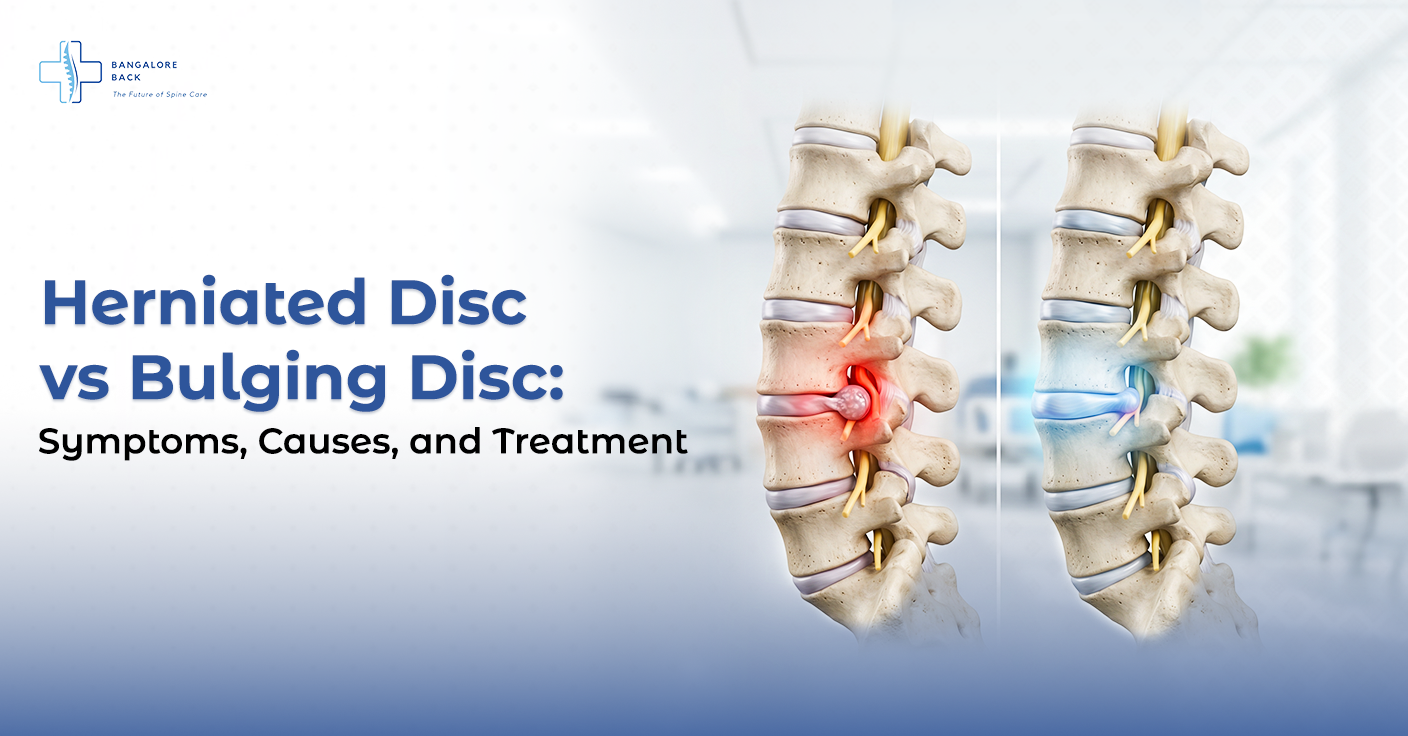
A bulging disc usually means the disc has pushed outward while the outer layer remains intact; a herniated disc means the inner gel-like material has pushed through a crack or tear. Patient language often overlaps, but the clinical concern is nerve pressure, symptom severity, and functional loss.

Here’s the awkward truth: the scan label alone doesn’t decide your treatment. People panic when they read “disc bulge,” yet many herniated discs improve on their own or with nonsurgical care. The pain pattern matters more than the wording on the report.

What Symptoms Should Make You Pay Attention?

Symptoms depend on where the disc problem is located. A herniated lumbar disc commonly causes sciatic nerve pain that travels from the buttock down the leg and sometimes into the foot. Other signs may include lower back pain, tingling, numbness, or muscle weakness.

In the neck, symptoms may include neck pain, tingling or numbness in the arms, pain between the shoulder blades, or pain radiating into the shoulder, arm, hand, or fingers.

What Causes Disc Problems?

Disc problems can develop due to ageing, traumatic injuries, repetitive bending or twisting, and improper lifting techniques.

Risk factors include smoking, prolonged sitting, obesity, diabetes, connective tissue disorders, a family history of disc problems, and being between 30 and 50 years of age.

How Is Disc Bulge or Slipped Disc Treatment Usually Managed?

Disc bulge treatment and slipped disc treatment usually begin with conservative care when there are no emergency symptoms. Treatment may include short periods of rest, pain medication, heat or ice therapy, physical therapy, activity modification, and in some cases spinal injections.

Long periods of bed rest should be avoided because stiffness can worsen pain. If pain is severe, one to three days of rest may help, but gentle movement remains important.

When Should You See a Spine Specialist?

Lumbar disc herniation treatment requires specialist evaluation when symptoms persist beyond four to six weeks, worsen over time, interfere with daily activities, or cause numbness, weakness, walking difficulty, or loss of bladder and bowel control.

A spine specialist may perform a physical examination and recommend tests such as MRI, CT scan, X-ray, EMG, or nerve conduction studies to identify the cause of symptoms.

Read More About: How to Keep Your Spine Healthy

Does Every Herniated Disc Need Surgery?

No. Approximately 90% of people with a herniated disc improve with conservative, non-surgical treatment. Surgery is generally considered only when symptoms fail to improve or when significant nerve compression causes serious neurological symptoms.

When surgery is necessary, options may include microdiscectomy, discectomy, laminotomy, laminectomy, artificial disc replacement, or spinal fusion.

Bangalore Back’s Disc Reality Table

What You Hear What It May Mean What Matters Clinically
Bulging disc Disc pushes outward Pain pattern and nerve irritation
Herniated disc Inner disc material leaks through the outer layer Numbness, weakness, sciatica, and functional loss
Slipped disc Common patient term for disc displacement Needs clinical interpretation
Lumbar disc herniation Disc issue in the lower back Leg pain, tingling, and walking difficulty
Surgery advised Usually after failed conservative care or urgent symptoms Severity, duration, and neurological findings

Final Thoughts

A disc diagnosis should provide clarity, not create fear. Understanding the difference between a bulging disc and a herniated disc is important, but symptoms matter more. Most disc conditions improve without surgery, but worsening nerve symptoms should never be ignored.

How to Keep Your Spine Healthy: 10 Doctor-Recommended Tips for a Pain-Free Back

Back pain rarely arrives like a dramatic injury. More often, it builds quietly: one long commute, one badly adjusted chair, one weekend lift done with the back instead of the legs. If you’re wondering how to avoid back pain before it starts, the answer rarely lies in one magic stretch or mattress. At Bangalore Back, we see spine health as a daily operating system, not a last-minute repair job.

Understanding the real-world causes of back pain, building strength with the best exercises for lower back pain, and getting serious about ergonomics all matter. The spine protects the spinal cord, supports upright posture, and moves with nearly every action we take, so small habits compound fast—sometimes in the wrong direction.

10 Spine Habits We’d Actually Defend in a Clinic Conversation

1. Stretch and Strengthen Your Back Consistently

Targeted stretching and strengthening support long-term spine conditioning, especially when guided by a therapist after injury or recurring discomfort. Many of the best exercises for lower back pain focus on core stability, hip mobility, and gentle extension rather than aggressive twisting. Done correctly, these can support chronic back pain management instead of provoking flare-ups.

2. Keep Your Weight in a Spine-Safe Range

Excess weight adds physical stress to the spine and can worsen existing back issues. When we talk about back pain causes in the clinic, unaddressed weight gain often appears on the list. Adjusting nutrition and daily movement is part of how to avoid back pain in the long term, not just during a single episode.

3. Don’t Smoke

Nicotine constricts blood vessels, limiting blood flow and the delivery of oxygen and nutrients to spinal tissues. That can accelerate inflammation and degeneration, making chronic back pain management harder and slowing the benefits of lower back pain exercises or physical therapy.

4. Cut Back on Inflammatory Food Patterns

Diets heavy in refined sugar, processed foods, red meat, and similar triggers may contribute to inflammation. Plant-forward choices can also support weight control. When we map out how to avoid back pain for busy professionals, diet changes are usually quieter than new exercises, but they matter just as much as ergonomics and proper chair height.

5. Lift With Your Legs, Not Your Lower Back

Keep your back straight, bend your knees, and let your legs carry the load. A single careless lift can expose months of poor conditioning. Poor lifting is one of the simplest causes of back pain to correct and one of the easiest ways to prevent the need for chronic back pain management later.

6. Move Before Stiffness Settles In

If your day runs on laptops, calls, and traffic, schedule movement like a meeting. Walk, stand, stretch, and reset your spine before the ache starts negotiating with your attention span. Simple mobility drills and the best exercises for lower back pain can often be broken into short sets throughout the day rather than a single long session.

7. Stand When You Can

Constant sitting makes neutral spine alignment harder, and standing desks can help some people reduce spinal stress. The desk isn’t the treatment, though. Your habits are. Knowing how to avoid back pain in modern office life means pairing ergonomic solutions with real movement, not just a new piece of furniture.

8. Try Yoga Carefully

Yoga can strengthen and stretch muscles, but beginners should start slowly and modify poses if they already have neck or back symptoms. The wrong pose done aggressively is not therapy—it’s a provocation. For some patients, gentle yoga sequences become part of chronic back pain management alongside targeted lower-back exercises.

9. Use Water Therapy When Pain Blocks Land Exercise

Water exercise can help older patients or people with severe discomfort build strength and confidence before progressing to land-based therapy. For those struggling to tolerate even the best exercises for lower back pain, water can be a safer bridge.

10. Seek Medical Advice When Pain Persists

Chronic back pain management shouldn’t depend on internet routines alone. Persistent pain, recurring flare-ups, numbness, tingling, sciatica, or weakness may indicate nerve involvement and should be assessed by a doctor. Most back or neck pain doesn’t require surgery, and targeted therapy can often help once your specific back pain causes are properly diagnosed.

The Bangalore Back Reality Check: What Helps, What Doesn’t

Daily Choice What It Does to Your Spine Better Clinical Direction
Sitting for hours without breaks Increases stiffness and spinal stress Move every 30–45 minutes
Random YouTube stretches during pain May aggravate irritated tissue Get guided physical therapy
Heavy lifting with a rounded back Loads the spine poorly Bend knees, brace, use legs
Ignoring tingling or leg pain Can delay nerve-related care See a spine specialist
Only buying ergonomic furniture Helps setup, not conditioning Pair ergonomics with movement

Final Thoughts

Spine health is not a single exercise, mattress, supplement, or chair. It’s a pattern. At Bangalore Back,
we’d rather help you correct that pattern early than wait until back pain starts deciding how you sit, work, sleep, and travel.

The practical route is simple: strengthen the back, keep moving, reduce inflammatory load, lift correctly, and don’t ignore nerve symptoms.

For anyone actively looking up how to avoid back pain, the next step is to match your unique causes of back pain with smart habits, evidence-based chronic back pain management, and a work setup shaped by real ergonomics for back pain—not just marketing. Pain-free living doesn’t come from overprotecting the spine. It comes from training it, respecting it, and getting the right medical review when the warning signs become more frequent.

10 Most Common Back Pain Causes — And What Each One Means for Your Spine

Back pain often occurs without a clear cause. One week, it is a dull, dragging stiffness after work. Another week, it suddenly catches you when you bend, or sends a sharp pull down the leg. The odd thing is, it can feel almost the same each time, but the cause behind it may be completely different.

Effective back pain treatment starts with understanding exactly what in the spine is in trouble. Muscles, ligaments, discs, nerves, joints, and bones can all hurt. Each of these structures needs its own kind of care. When we guess, recovery slows, and small issues have time to become bigger.

At Bangalore Back, we look at back pain as a message, not just a complaint. Poor posture, muscle strain, slipped disc, degenerative disc disease, sciatica, spinal stenosis, arthritis, osteoporosis, and even long-term stress can all change how the spine feels and moves. Our aim is simple: find the real cause, protect movement, and help the back heal more safely.

What Are the Most Common Back Pain Causes?

Common causes of back pain range from everyday posture habits to age-related wear and tear on the discs, joints, or bones. Some problems come on suddenly. Others build up quietly over the years.

Back pain is not one single disease. It is a cluster of problems that occur in the same region.

Here are 10 causes that should not be ignored:

1. Poor Posture

Long hours at a desk, bending over a laptop, slouching on the sofa, or standing with most of your weight on one leg all put extra load on the spine. Over time, the muscles and ligaments in the back work harder than they should, especially in the lower back, leading to aches and stiffness.

2. Muscle or Ligament Strain

A quick twist, lifting a suitcase awkwardly, a heavy gym set done in a hurry, or even a sudden jerk while travelling can strain the soft tissues. The back often feels sore, tight, or “pulled” and hurts more with movement than at rest.

3. Herniated or Bulging Disc (Slipped Disc)

The discs between the vertebrae act like cushions. When the softer centre of a disc protrudes, it can press or irritate a nearby nerve. This can lead to back and leg pain, as well as tingling or numbness. In these cases, you need a targeted slipped disc treatment, not just pain medication.

4. Degenerative Disc Disease

With age, discs lose height, water, and flexibility. This is known as degenerative disc disease. With less natural cushioning in the spine, you may experience pain, stiffness and limited mobility. It usually develops slowly and quietly changes how the spine moves long before symptoms become strong.

5. Sciatica

Sciatica is pain that travels along the sciatic nerve, from the lower back through the hip and buttocks, and often down the leg. It usually appears when a disc, bone spur, or narrowing of the spinal canal presses on the nerve. Proper sciatica treatment targets the pressure on the spine, not just the pain in the leg.

6. Spinal Stenosis

In spinal stenosis, the space inside the spine where the nerves pass becomes narrower. This can cause back pain, heaviness or leg pain, numbness, or weakness, especially during walking or standing. It is more common in older adults as joints, ligaments, and discs change with age.

7. Spondylolisthesis

Spondylolisthesis happens when one vertebra slips forward over the one below it. Even a small slip can disturb spinal alignment and press on nearby nerves. Some people mainly notice lower back pain; others feel pain, tingling, or weakness in one or both legs.

8. Osteoarthritis

Osteoarthritis can affect the small facet joints in the spine. As the cartilage in these joints wears down, they may become inflamed, stiff, and painful. Simple activities like bending, twisting, standing for a while, or walking can become uncomfortable.

9. Osteoporosis

Osteoporosis makes bones weaker and more fragile. In the spine, this can lead to small compression fractures that cause new back pain or gradually worsening pain, along with changes in height and posture. In such cases, back pain treatment has to address both the fracture and the underlying bone health.

10. Psychological Stress

Stress does not stay in the mind alone. The body often holds it in the neck, shoulder, and lower back muscles. When stress is constant, these muscles remain tight, and the whole area becomes more sensitive. Mild back issues can become chronic pain.

How Do Age, Bone Health, and Stress Affect the Spine?

Age, bone strength, joint health, and stress all change how your spine handles daily load and pain.

  • With age, discs dry out, and joints wear, which can make the back feel stiff or sore.
  • When bones are weakened by osteoporosis, even minor forces can cause fractures.
  • When stress stays high, muscles remain tight, and pain feels stronger and more constant.

Pain tablets may reduce discomfort, but they do not explain why the pain started. A strained muscle, a slipped disc, an arthritic joint, a fragile bone, and an irritated nerve each need a different plan. Effective back pain treatment always starts with a clear cause.

Not Just Backache: Warning Signs Your Spine Needs Expert Care

Many people have a minor backache now and then that settles with rest, a short break from heavy work, and basic stretching. But some patterns should not be ignored, and they do call for specialist spine pain treatment.

You should seek help if you notice:

  • Pain moving from the lower back into the hip, buttock, or down the leg.
  • Tingling, numbness, burning, or “electric” sensations.
  • Back pain after lifting, a fall, a sudden twist, or an accident.
  • Stiffness that disturbs walking, sitting, or sleeping.
  • Pain that keeps coming back even after you improve posture and daily habits.

Ongoing pain is not simply “normal tiredness” from a long day. It is the spine asking for a proper check.

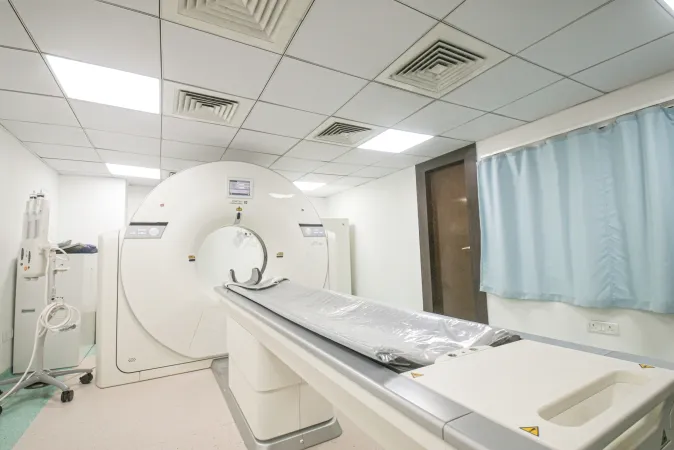
Why 640 Slice CT Scan Imaging?

Bangalore, 23rd December 2024 – Bangalore Hospitals, a renowned brand in healthcare innovation and quality, has introduced the first-ever 640-slice CT Scan imaging technology in India, setting a global benchmark for the least radiation exposure ever in a CT scan. This cutting-edge technology guarantees quicker, safer, and more detailed imaging, revolutionizing diagnostic precision and reinforcing the hospital’s commitment to unmatched patient care.  

The 640 Slice CT Scan stands out with its unparalleled speed and accuracy. It completes heart scans in just 3 seconds and whole-body scans in 9 seconds, providing a life-saving tool to detect issues swiftly and precisely. Amid rising concerns about sudden young cardiac deaths, this scan offers a non-invasive, rapid, and safe solution to identify potential cardiac problems before they escalate, enabling timely intervention and saving lives.  

“We are raising the bar in healthcare with the adoption of this innovative technology. Our doctors can give life-saving diagnoses in rapid time thanks to the 640 Slice CT’s ability to acquire comprehensive images faster,” said Dr. Lahari Surapaneni, CEO, Bangalore Hospitals. “This demonstrates our steadfast dedication to providing patients with the best diagnostic resources currently accessible.”

Why the 640 Slice CT Scan Stands Out

  • Unparalleled Safety: Delivers the least radiation exposure globally, ensuring safety even for repeated scans.
  • Unmatched Speed: Completes scans in seconds, with India’s fastest rotation speed.
  • Precision Diagnosis: Produces clearer images, aiding in the early detection and treatment of critical conditions.

“Our 640 Slice CT Scan Imaging offers a non-invasive solution for detecting life-threatening conditions before they escalate,” said Dr. Abhishek Mannem, Medical Director, Bangalore Hospitals. “This technology enables patients and professionals to take prompt action by clearly exposing concealed concerns. It’s a dedication to saving lives, not merely an advancement in technology.”

I would consider the 640 Slice CT as a noninvasive cardiac angiogram, particularly for patients with Chest Pain and any patients that are high risk for a heart attack. This machine gives high quality and high resolution coronary angiograms as well as peripheral angiograms and the images are really accurate. It is a very good noninvasive screening test and is highly recommended to rule out blockages of arteries in high risk individuals such as those with longstanding diabetes, smokers as well as those with family history of cardiac deaths, as per medical advice said Dr. CN Manjunath, Member of Parliament and Director of Cardiac Services, Bangalore Hospitals.

The launch also marks a transformative chapter for Bangalore Hospitals, which is regaining its former glory under new management. Now operating under a USA-based brand, the hospital embraces transparent, truthful practices, enhancing its standing as a beacon of trust and excellence.  

Dr. Lahari continued, “Our goal has always been to blend state-of-the-art technology with a human touch. We’re making that mission a reality for each and every patient who enters our doors with the 640 Slice CT.”