
 +91- 8889990247
 Book an Appointment
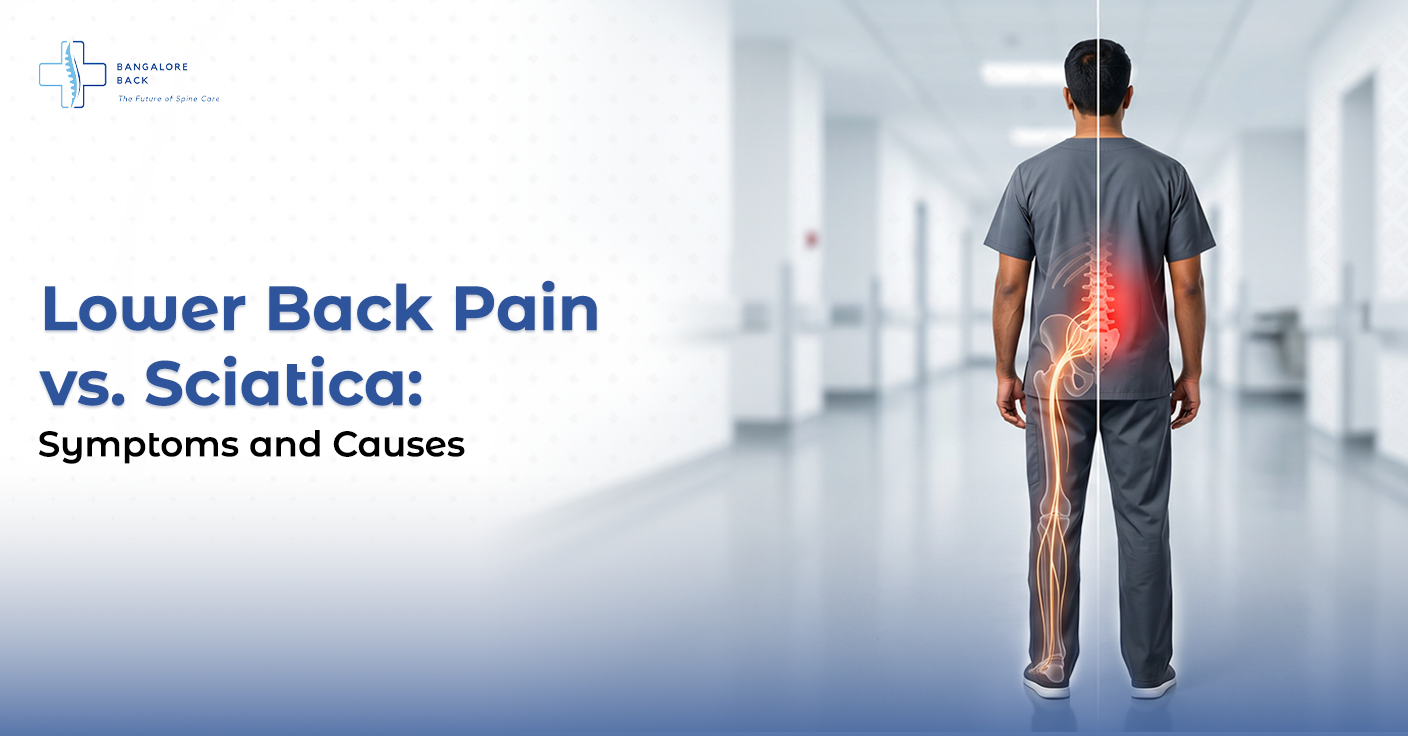
Lower Back Pain vs. Sciatica: Symptoms and Causes
Lower back pain vs. sciatica is not just a medical debate. It shapes what you should do next. At Bangalore Back, this is the first serious question in back pain treatment because localised back pain and nerve-related leg pain don’t behave the same way.
Lower back pain usually feels like a dull ache, stiffness, or tightness around the lumbar spine. The discomfort tends to stay in the back. Sciatica is different because it often starts in the lower back but then travels into the buttocks, leg, or even the foot when the sciatic nerve is irritated or compressed.
In simple terms, lower back pain is localised lumbar discomfort. Sciatica is nerve-related pain that radiates beyond the back. That difference matters because it affects how we assess your symptoms and plan your care at Bangalore Back.
Lower Back Pain vs. Sciatica: The Real Difference
Lower back pain usually occurs in the lumbar region and often stems from muscle strain, ligament sprain, poor posture, or reduced flexibility. Sciatica is different because it follows nerve irritation or compression and may cause sharp, shooting, burning, tingling, numbness, or weakness down the leg.
Lower back pain can range from a mild, dull ache to severe discomfort, with symptoms such as stiffness, reduced flexibility, difficulty standing upright, and pain that typically does not radiate down the legs.
Sciatica, on the other hand, is linked to irritation or compression of the sciatic nerve, which runs from the lower back down into the legs. That is why sciatica pain relief often needs more than rest.
Which Back Pain Causes Usually Stay Local?
Local lower back pain often comes from muscle or ligament strain, overexertion, heavy lifting, poor sitting or standing posture, a sedentary lifestyle that weakens spinal muscles, or minor injuries affecting the spine.
At Bangalore Back, we commonly notice these contributing factors:
- Laptop posture
- Long work calls
- Traffic and commuting
- Low daily walking time
- Workouts that overload undertrained spinal muscles
Read More: 10 Most Common Back Pain Causes — And What Each One Means for Your Spine
Which Symptoms Suggest Sciatica Instead?
Sciatica symptoms commonly include sharp, shooting pain radiating from the lower back to the buttocks and legs, numbness, tingling or burning sensations in the legs or feet, weakness in the affected leg, and pain that worsens with sitting, coughing, or sneezing.
If coughing or sneezing worsens radiating pain, the spine may be signalling nerve sensitivity. Don’t dismiss it as ordinary back pain.
How Should Back Pain Treatment Change When Sciatica Is Suspected?
Back pain treatment should change when symptoms travel below the back, include numbness or weakness, or worsen with sitting, coughing, or sneezing. A spine specialist may use physical examination, medical history, and imaging such as MRI or CT scans to identify disc problems or nerve compression.
Many patients treat every back problem with the same heat pack, painkiller, and rest routine. That may help a simple strain, but it may not be enough when the sciatic nerve is involved.
Correct diagnosis helps distinguish between general back pain and sciatica and may include physical examination, medical history evaluation, MRI, or CT scans to detect herniated discs or nerve compression.
What Are the Common Initial Treatments for Sciatica?
Most sciatica and chronic back pain cases can improve without surgery through a short period of rest, posture correction, physical therapy, stretching and strengthening exercises, lifestyle changes, ergonomic improvements, and when appropriate, non-surgical spinal decompression.
Physical therapy plays an important role in improving flexibility, reducing stiffness, and relieving pressure on the sciatic nerve through targeted exercises.
When Should You See a Spine Specialist?
You should see a spine specialist when pain radiates into the leg, numbness or tingling appears, weakness develops, pain worsens while sitting, coughing, or sneezing, or daily movement becomes restricted.
Early evaluation helps determine whether the pain is muscular, disc-related, or nerve-driven, allowing treatment to become more targeted.
Bangalore Back Symptom Map: Local Pain or Nerve Pain?
| What You Feel | More Likely Pattern | What It Means for Care |
|---|---|---|
| Dull ache in the lower back | Local lower back pain | Posture, mobility, and strengthening focus |
| Stiffness and reduced flexibility | Local back issue | Movement correction and therapy |
| Pain travelling to the buttocks or legs | Sciatica pattern | Nerve assessment needed |
| Tingling, burning, or numbness | Sciatic nerve irritation | Don’t rely on rest alone |
| Leg weakness | Possible nerve involvement | See a spine specialist promptly |
Final Thoughts
Lower back pain and sciatica may begin in the same region, but they do not tell the same story. A local ache often points toward muscle, ligament, posture, or movement-related problems. Radiating pain, tingling, numbness, burning, or weakness changes the conversation.
At Bangalore Back, we look at where pain travels, what triggers it, and how it affects function before recommending care. That is the clearest path to sciatica treatment, sciatica pain relief, and effective back pain treatment.
What is the easiest way to understand lower back pain vs sciatica?
Lower back pain usually stays in the lower back. Sciatica often travels into the buttocks, leg, or foot because the sciatic nerve is irritated.
How does Sciatica Treatment usually begin?
It often begins with diagnosis, posture correction, physical therapy, targeted exercise, lifestyle changes, and, when appropriate, non-surgical care.
Why should I not ignore tingling or leg weakness?
Tingling, numbness, or weakness may indicate nerve involvement, which requires proper assessment rather than routine back pain self-care
Written and Verified by:
Dr. Abhishek Mannem
Exp: 10+ Year
MBBS, MS(ORTHO), DNB(ORTHO) FISS (SPINE SURGERY)
Spine Surgery, Orthopedics and Sports Medicine
Featured Blogs

Dr. Abhishek Mannem Honoured with Healthcare Access Award at Entrepreneur Game Changers Award & Summit 2025–26
Under Dr. Abhishek Mannem's leadership, Bangalore Hospitals has moved from a traditional, city-centred approach to a hub-and-spoke outreach system.
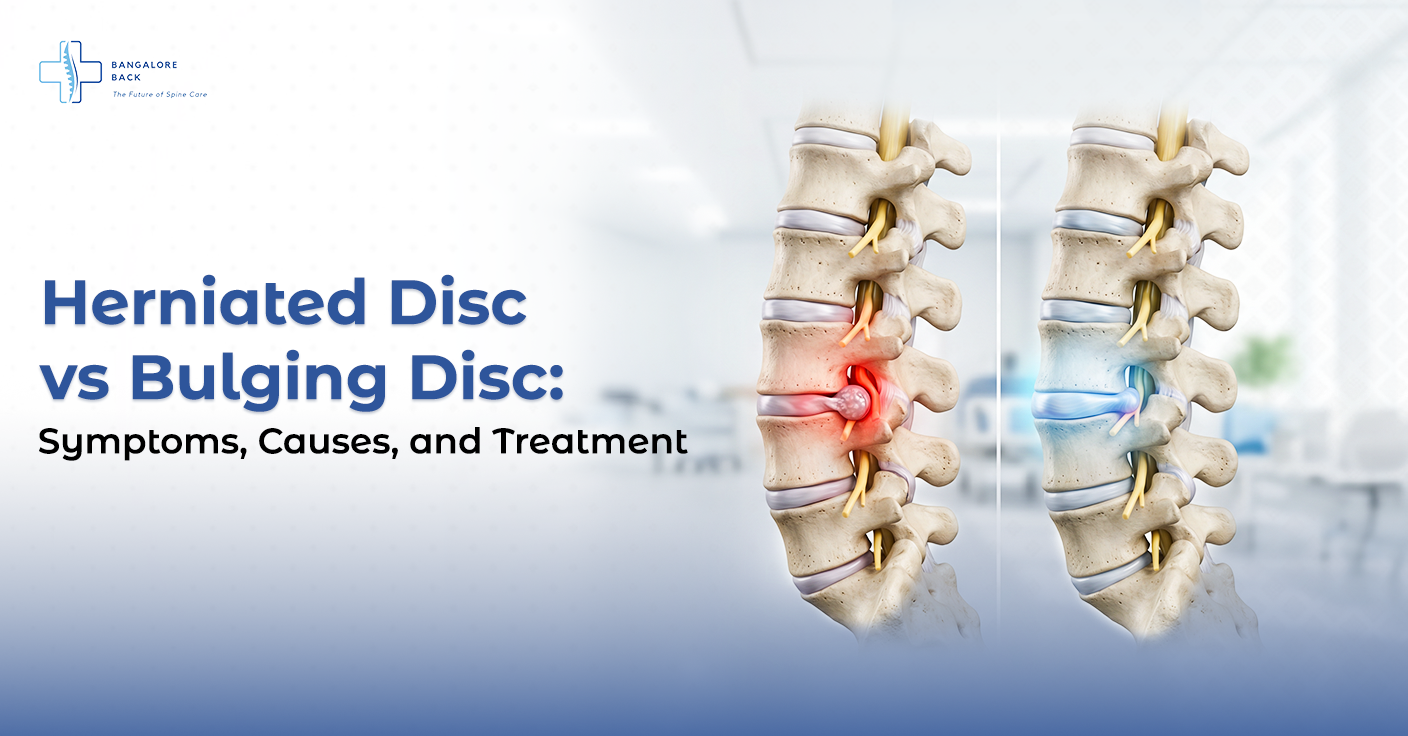
Herniated Disc vs. Bulging Disc: Symptoms, Causes, and Treatment
Understand the difference between bulging and herniated discs, symptoms, causes, treatment options, and when to seek specialist care.
How to Keep Your Spine Healthy: 10 Doctor-Recommended Tips for a Pain-Free Back
Protect your spine with daily movement, proper lifting, healthy habits, and early care to reduce the risk of back pain.
10 Most Common Back Pain Causes — And What Each One Means for Your Spine
Back pain can result from posture, muscle strain, disc issues, nerve compression, arthritis, osteoporosis, or stress.