
 +91- 8889990247
 Book an Appointment

How to Keep Your Spine Healthy: 10 Doctor-Recommended Tips for a Pain-Free Back
Back pain rarely arrives like a dramatic injury. More often, it builds quietly: one long commute, one badly adjusted chair, one weekend lift done with the back instead of the legs. If you’re wondering how to avoid back pain before it starts, the answer rarely lies in one magic stretch or mattress. At Bangalore Back, we see spine health as a daily operating system, not a last-minute repair job.
Understanding the real-world causes of back pain, building strength with the best exercises for lower back pain, and getting serious about ergonomics all matter. The spine protects the spinal cord, supports upright posture, and moves with nearly every action we take, so small habits compound fast—sometimes in the wrong direction.
10 Spine Habits We’d Actually Defend in a Clinic Conversation
1. Stretch and Strengthen Your Back Consistently
Targeted stretching and strengthening support long-term spine conditioning, especially when guided by a therapist after injury or recurring discomfort. Many of the best exercises for lower back pain focus on core stability, hip mobility, and gentle extension rather than aggressive twisting. Done correctly, these can support chronic back pain management instead of provoking flare-ups.
2. Keep Your Weight in a Spine-Safe Range
Excess weight adds physical stress to the spine and can worsen existing back issues. When we talk about back pain causes in the clinic, unaddressed weight gain often appears on the list. Adjusting nutrition and daily movement is part of how to avoid back pain in the long term, not just during a single episode.
3. Don’t Smoke
Nicotine constricts blood vessels, limiting blood flow and the delivery of oxygen and nutrients to spinal tissues. That can accelerate inflammation and degeneration, making chronic back pain management harder and slowing the benefits of lower back pain exercises or physical therapy.
4. Cut Back on Inflammatory Food Patterns
Diets heavy in refined sugar, processed foods, red meat, and similar triggers may contribute to inflammation. Plant-forward choices can also support weight control. When we map out how to avoid back pain for busy professionals, diet changes are usually quieter than new exercises, but they matter just as much as ergonomics and proper chair height.
5. Lift With Your Legs, Not Your Lower Back
Keep your back straight, bend your knees, and let your legs carry the load. A single careless lift can expose months of poor conditioning. Poor lifting is one of the simplest causes of back pain to correct and one of the easiest ways to prevent the need for chronic back pain management later.
6. Move Before Stiffness Settles In
If your day runs on laptops, calls, and traffic, schedule movement like a meeting. Walk, stand, stretch, and reset your spine before the ache starts negotiating with your attention span. Simple mobility drills and the best exercises for lower back pain can often be broken into short sets throughout the day rather than a single long session.
7. Stand When You Can
Constant sitting makes neutral spine alignment harder, and standing desks can help some people reduce spinal stress. The desk isn’t the treatment, though. Your habits are. Knowing how to avoid back pain in modern office life means pairing ergonomic solutions with real movement, not just a new piece of furniture.
8. Try Yoga Carefully
Yoga can strengthen and stretch muscles, but beginners should start slowly and modify poses if they already have neck or back symptoms. The wrong pose done aggressively is not therapy—it’s a provocation. For some patients, gentle yoga sequences become part of chronic back pain management alongside targeted lower-back exercises.
9. Use Water Therapy When Pain Blocks Land Exercise
Water exercise can help older patients or people with severe discomfort build strength and confidence before progressing to land-based therapy. For those struggling to tolerate even the best exercises for lower back pain, water can be a safer bridge.
10. Seek Medical Advice When Pain Persists
Chronic back pain management shouldn’t depend on internet routines alone. Persistent pain, recurring flare-ups, numbness, tingling, sciatica, or weakness may indicate nerve involvement and should be assessed by a doctor. Most back or neck pain doesn’t require surgery, and targeted therapy can often help once your specific back pain causes are properly diagnosed.
The Bangalore Back Reality Check: What Helps, What Doesn’t
| Daily Choice | What It Does to Your Spine | Better Clinical Direction |
|---|---|---|
| Sitting for hours without breaks | Increases stiffness and spinal stress | Move every 30–45 minutes |
| Random YouTube stretches during pain | May aggravate irritated tissue | Get guided physical therapy |
| Heavy lifting with a rounded back | Loads the spine poorly | Bend knees, brace, use legs |
| Ignoring tingling or leg pain | Can delay nerve-related care | See a spine specialist |
| Only buying ergonomic furniture | Helps setup, not conditioning | Pair ergonomics with movement |
Final Thoughts
Spine health is not a single exercise, mattress, supplement, or chair. It’s a pattern. At Bangalore Back,
we’d rather help you correct that pattern early than wait until back pain starts deciding how you sit, work, sleep, and travel.
The practical route is simple: strengthen the back, keep moving, reduce inflammatory load, lift correctly, and don’t ignore nerve symptoms.
For anyone actively looking up how to avoid back pain, the next step is to match your unique causes of back pain with smart habits, evidence-based chronic back pain management, and a work setup shaped by real ergonomics for back pain—not just marketing. Pain-free living doesn’t come from overprotecting the spine. It comes from training it, respecting it, and getting the right medical review when the warning signs become more frequent.
How does ergonomics for back pain help during office work?
Ergonomics helps reduce spinal strain by improving sitting posture, screen height, and work setup. It works best when paired with regular movement breaks and, when needed, the best exercises for lower back pain.
Why should I see a spine specialist for recurring back pain?
Recurring pain, tingling, numbness, sciatica, or weakness may point to nerve involvement. A spine specialist can assess the causes of your back pain, explain the specific factors contributing to it, and guide treatment as part of long-term chronic back pain management.
What is the safest way to start chronic back pain management?
Start with a medical assessment, targeted physical therapy, daily movement, posture correction, and lifestyle changes rather than random exercises. A structured plan that includes ergonomics for back pain and the best exercises for lower back pain is safer than trying them at home by trial and error.
Written and Verified by:

Dr. Abhishek Mannem
Exp: 10+ Year
MBBS, MS(ORTHO), DNB(ORTHO) FISS (SPINE SURGERY)
Spine Surgery, Orthopedics and Sports Medicine
Featured Blogs

Dr. Abhishek Mannem Honoured with Healthcare Access Award at Entrepreneur Game Changers Award & Summit 2025–26
Under Dr. Abhishek Mannem's leadership, Bangalore Hospitals has moved from a traditional, city-centred approach to a hub-and-spoke outreach system.

Lower Back Pain vs. Sciatica: Symptoms and Causes
Lower back pain and sciatica may start similarly, but nerve-related symptoms like radiating pain, tingling, or weakness need different care.
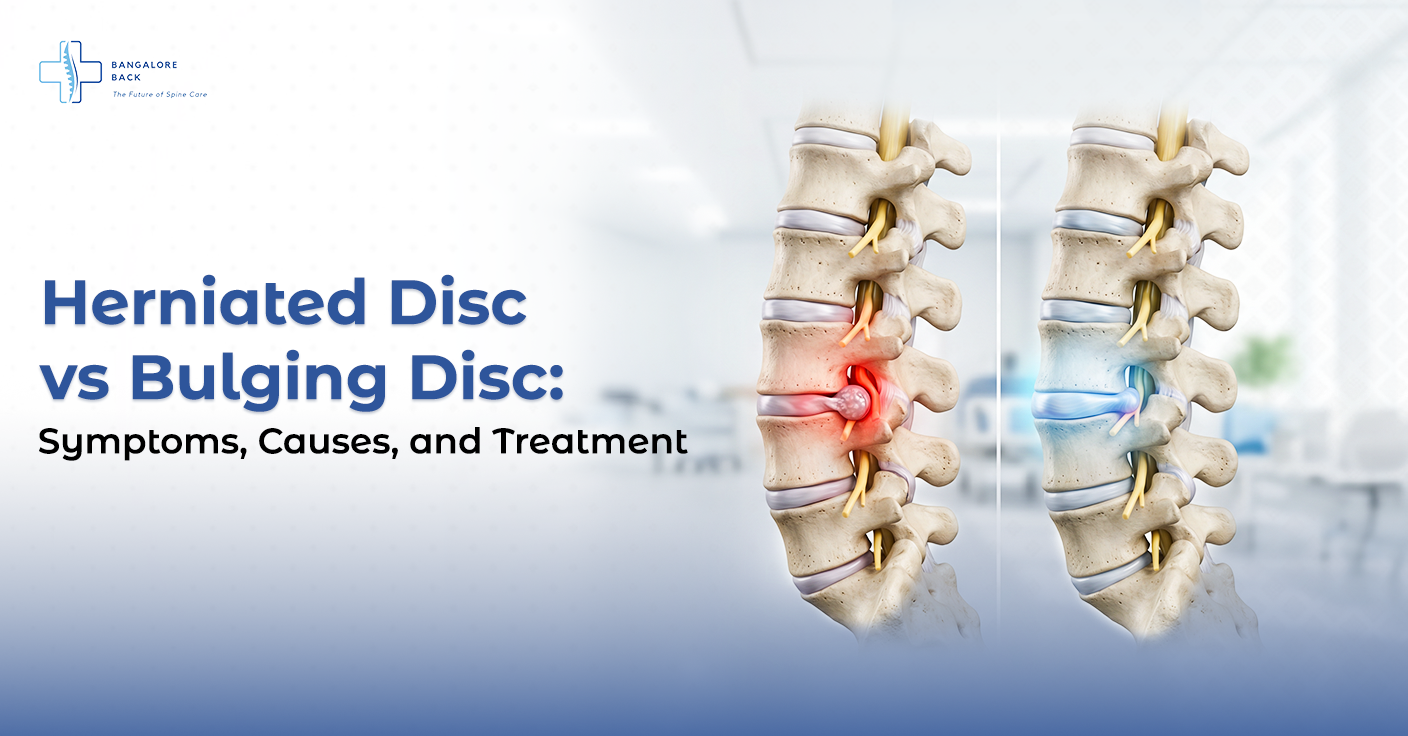
Herniated Disc vs. Bulging Disc: Symptoms, Causes, and Treatment
Understand the difference between bulging and herniated discs, symptoms, causes, treatment options, and when to seek specialist care.

10 Most Common Back Pain Causes — And What Each One Means for Your Spine
Back pain can result from posture, muscle strain, disc issues, nerve compression, arthritis, osteoporosis, or stress.