
 +91- 8889990247
 Book an Appointment
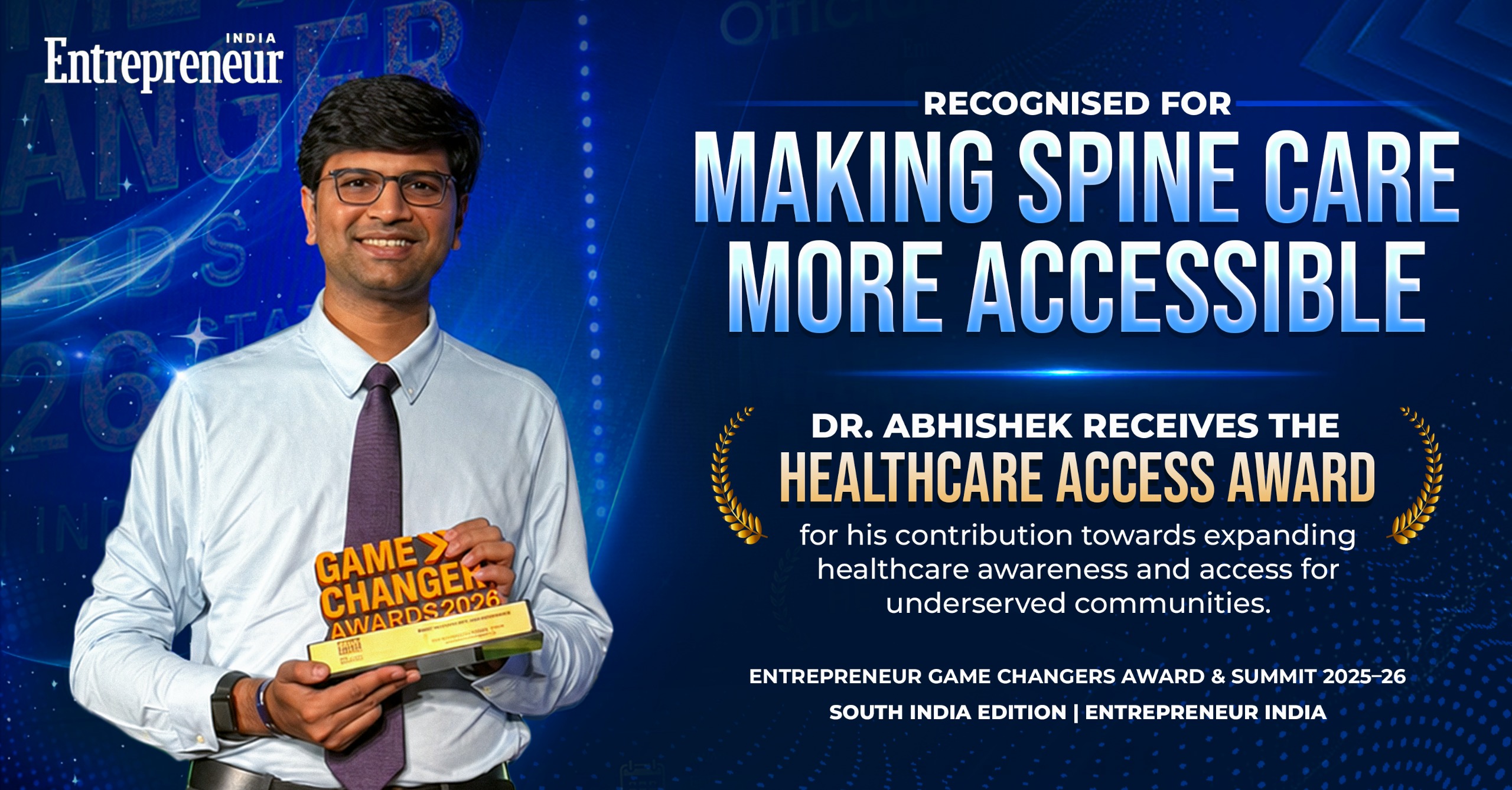
Dr. Abhishek Mannem Honoured with Healthcare Access Award at Entrepreneur Game Changers Award & Summit 2025–26
The recognition celebrates an outreach-led model bringing specialist care closer to underserved communities.
In a significant recognition of outreach-driven healthcare, Dr. Abhishek Mannem, Director Spine Division and Medical Director, Bangalore Hospitals, has been named Winner of the Healthcare Access Award at the Entrepreneur Game Changers Award & Summit 2025–26, South India Edition, Entrepreneur India.
The Healthcare Access Award honours individuals who have expanded access to healthcare services, awareness, or affordability for underserved populations through consistent on-ground and outreach-led initiatives. Dr. Abhishek Mannem is being recognised for spearheading a specialist-led healthcare access model that takes tertiary-grade expertise directly to underserved regions, instead of waiting for patients to make the long journey to metropolitan centres.
About the Entrepreneur Game Changers Award & Summit 2025–26
The Entrepreneur Game Changers Award & Summit 2025–26, South India Edition, Entrepreneur India, recognises individuals and organisations that create measurable impact across sectors.
Within this platform, the Healthcare Access Award category honours individuals who have improved access to healthcare services, awareness, or affordability for underserved populations through on-ground or outreach-driven efforts.
Redefining Access: From City-Centred to Outreach-Led Care
Under Dr. Abhishek Mannem’s leadership, Bangalore Hospitals has moved from a traditional, city-centred approach to a hub-and-spoke outreach system. In just three years, this model has expanded from serving a 3 km radius in Bengaluru to building a 2,500 km outreach network spanning rural Karnataka, Andhra Pradesh, West Bengal, and remote regions of Assam.
At the heart of the model is a strong emphasis on:
- Specialist-led screening camps
- Early diagnosis programs
- Structured referral pathways
- Long-term follow-up
for complex conditions such as cardiac disease, cancer, neurological disorders, and spine conditions.
“This recognition reflects our belief that specialist healthcare should not remain locked inside major cities. Patients in underserved regions deserve access to timely diagnosis, continuity of care, and the same clinical commitment as any urban patient,” said Dr. Abhishek Mannem, Director of Spine Division and Medical Director, Bangalore Hospitals.
“Our goal is to build a system where geography and income do not decide whether a patient receives specialist care.”
A “One-Doctor” Journey: Continuity as the Core Principle
A defining feature of the Bangalore Hospitals model is its continuity-first approach, which the organisation describes as a “One-Doctor” journey. In this framework, the same specialist who first evaluates a patient in a remote village can stay involved through:
- Diagnosis during outreach.
- Definitive treatment in Bengaluru.
- Follow-up with the patient’s own community.
This approach directly tackles a critical gap in many outreach programs: patients who are screened at camps but then are lost during referral or treatment handover. By ensuring a single, accountable clinical thread for each patient, the model strengthens trust, adherence, and long-term outcomes.
Impact at Scale: Thousands Screened, Lives Connected to Tertiary Care
Over three years, the outreach initiative has:
- Screened nearly 5,000 patients across multiple locations.
- Resulted in around 1,500 admissions to Bangalore Hospitals’ tertiary care units from these regions.
Beyond these numbers, the model has driven:
- A rise in first-time specialist consultations in rural sectors.
- Stronger early-stage case identification.
- Repeat engagement from patients and families.
- Family-level referrals as trust builds through lived experience in the community.
Value for Patients, Partners, and the Healthcare Ecosystem
The access-led model has been designed to create value across the healthcare chain: patients, local partners, tertiary centres, and the broader ecosystem.
For patients, the model helps:
- Reduce unnecessary travel to cities.
- Avoid repeat diagnostics.
- Ease the financial burden of seeking specialist care.
For local general practitioners and clinics, it:
- Strengthens diagnostic capability.
- Builds long-term community trust.
For tertiary care centres, structured referral pathways support:
- Efficient capacity planning.
- Consistent clinical outcomes across locations.
Affordability Through Efficiency, Not Discounting
Affordability is embedded into the model through process efficiency rather than price discounting.
- Structured referrals to limit duplicative tests and reduce diagnostic repetition.
- Aligned treatment pathways between outreach clinics and the main hospital.
- Government empanelment, PSU partnerships, and BPL programs that support economic viability for underserved patients.
Standard of Care Equality: One Standard for Every Patient
Bangalore Hospitals Group operates on the principle of “Standard of Care Equality”, ensuring that Below Poverty Line (BPL) and paying patients receive the same standard of care.
This non-discriminatory approach is upheld through:
- Structured induction and behavioural protocols
- Continuous training for staff
- Transparent billing practices
- Appropriate and judicious use of diagnostics
- Avoidance of unnecessary interventions
“Healthcare access is not only about reaching more people. It is about staying accountable after the first consultation.”
Dr. Abhishek Mannem’s work has helped build a model where outreach, referral, tertiary care, and follow-up are connected as one patient journey.
Built on Partnerships and Community Trust
The initiative grows through partnerships with:
- Local general practitioners and clinics
- Community leaders
- NGOs, including Rotary and Lions Clubs
- Existing rural healthcare networks
This partnership-driven approach enables specialist services to expand reach without relying solely on asset-heavy hospital infrastructure. Instead, it blends the strengths of local networks with tertiary-grade expertise.
In digitally dark rural areas, where online access is limited, Bangalore Hospitals complements its digital efforts with:
- Community posters and local media coverage
- On-the-ground awareness campaigns
- Local testimonials and community storytelling
- Trust-building driven by patients sharing their own treatment journeys at outreach events
These stories from successfully treated patients create a referral loop grounded in lived experience and community confidence.
Looking Ahead: Digital Integration and AI-Enabled Language Support
As the model evolves, Bangalore Hospitals is developing a digital care platform to integrate:
- Outreach clinics
- Referral pathways
- Hospital-based care
into a single, coherent patient journey.
The organisation is also exploring AI-enabled language solutions to:
- Help rural patients communicate in local dialects
- Ensure doctors receive information in a form and language they can readily use
A Blueprint for Emerging Regions
The long-term ambition is to replicate this access model through collaborations across India, Pan-Asia, and African nations where high disease burden intersects with limited specialist availability.
Dr. Abhishek Mannem’s recognition as Winner of the Healthcare Access Award underscores the growing importance of outreach-led, continuity-first healthcare in closing India’s specialist access gap. It also marks an important milestone in Bangalore Hospitals’ mission to deliver specialist care to populations that have historically been excluded from timely tertiary healthcare.
About Bangalore Hospitals
Bangalore Hospitals is a Bengaluru-headquartered healthcare organisation incorporated in 1991. Operating in the healthcare sector, the organisation is led by:
- Dr. Krishna Prasad Surapaneni, Chairman.
- Dr. Lahari Surapaneni, CEO.
- Dr. Abhishek Mannem, Director Spine Division and Medical Director.
Bangalore Hospitals focuses on specialist-led care, structured referral pathways, and outreach-driven healthcare access for underserved populations.
Written and Verified by:
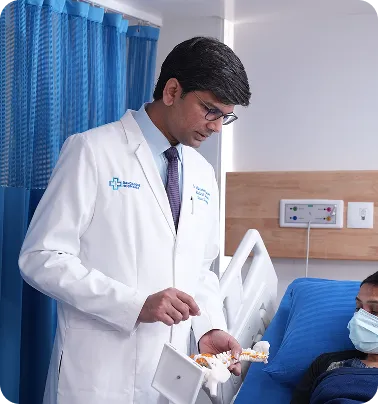
Dr. Abhishek Mannem
Exp: 10+ Year
MBBS, MS(ORTHO), DNB(ORTHO) FISS (SPINE SURGERY)
Spine Surgery, Orthopedics and Sports Medicine
Featured Blogs

Lower Back Pain vs. Sciatica: Symptoms and Causes
Lower back pain and sciatica may start similarly, but nerve-related symptoms like radiating pain, tingling, or weakness need different care.

Herniated Disc vs. Bulging Disc: Symptoms, Causes, and Treatment
Understand the difference between bulging and herniated discs, symptoms, causes, treatment options, and when to seek specialist care.

How to Keep Your Spine Healthy: 10 Doctor-Recommended Tips for a Pain-Free Back
Protect your spine with daily movement, proper lifting, healthy habits, and early care to reduce the risk of back pain.

10 Most Common Back Pain Causes — And What Each One Means for Your Spine
Back pain can result from posture, muscle strain, disc issues, nerve compression, arthritis, osteoporosis, or stress.