
 +91- 8889990247
 Book an Appointment
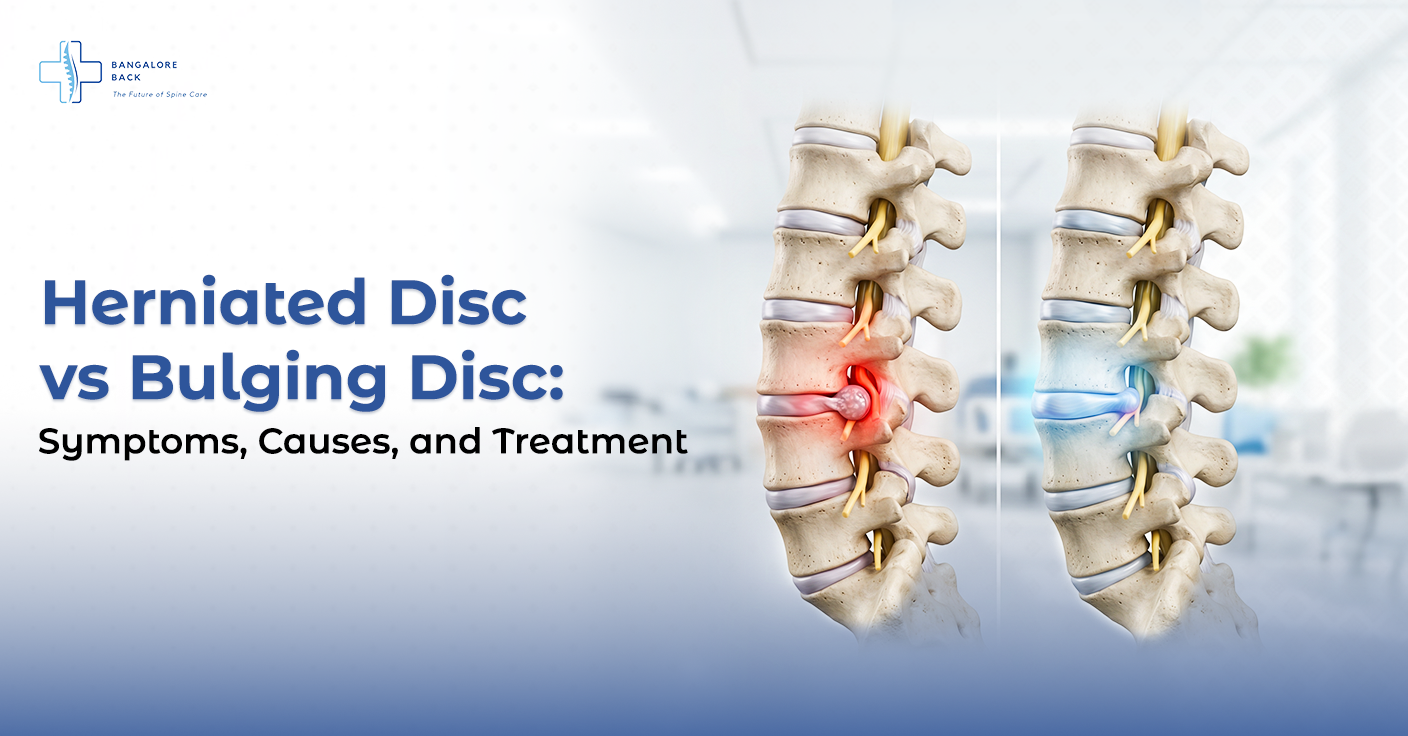
Herniated Disc vs. Bulging Disc: Symptoms, Causes, and Treatment
A disc problem sounds simple until the scan report arrives. Bulge, herniation, protrusion, or slipped disk. And suddenly, ordinary back pain starts carrying medical vocabulary you didn’t ask for.
At Bangalore Back, we explain the difference between bulging and herniated discs in plain terms because the distinction affects treatment, anxiety, and timing. A spinal disc works like a cushion between vertebrae, but scan reports often add confusing labels. To understand what they really mean for you, it helps to first distinguish between a bulging disc and a herniated disc.
Bulging Disc vs Herniated Disc: Key Differences
A bulging disc usually means the disc has pushed outward while the outer layer remains intact; a herniated disc means the inner gel-like material has pushed through a crack or tear. Patient language often overlaps, but the clinical concern is nerve pressure, symptom severity, and functional loss.
Here’s the awkward truth: the scan label alone doesn’t decide your treatment. People panic when they read “disc bulge,” yet many herniated discs improve on their own or with nonsurgical care. The pain pattern matters more than the wording on the report.
What Symptoms Should Make You Pay Attention?
Symptoms depend on where the disc problem is located. A herniated lumbar disc commonly causes sciatic nerve pain that travels from the buttock down the leg and sometimes into the foot. Other signs may include lower back pain, tingling, numbness, or muscle weakness.
In the neck, symptoms may include neck pain, tingling or numbness in the arms, pain between the shoulder blades, or pain radiating into the shoulder, arm, hand, or fingers.
What Causes Disc Problems?
Disc problems can develop due to ageing, traumatic injuries, repetitive bending or twisting, and improper lifting techniques.
Risk factors include smoking, prolonged sitting, obesity, diabetes, connective tissue disorders, a family history of disc problems, and being between 30 and 50 years of age.
How Is Disc Bulge or Slipped Disc Treatment Usually Managed?
Disc bulge treatment and slipped disc treatment usually begin with conservative care when there are no emergency symptoms. Treatment may include short periods of rest, pain medication, heat or ice therapy, physical therapy, activity modification, and in some cases spinal injections.
Long periods of bed rest should be avoided because stiffness can worsen pain. If pain is severe, one to three days of rest may help, but gentle movement remains important.
When Should You See a Spine Specialist?
Lumbar disc herniation treatment requires specialist evaluation when symptoms persist beyond four to six weeks, worsen over time, interfere with daily activities, or cause numbness, weakness, walking difficulty, or loss of bladder and bowel control.
A spine specialist may perform a physical examination and recommend tests such as MRI, CT scan, X-ray, EMG, or nerve conduction studies to identify the cause of symptoms.
Read More About: How to Keep Your Spine Healthy
Does Every Herniated Disc Need Surgery?
No. Approximately 90% of people with a herniated disc improve with conservative, non-surgical treatment. Surgery is generally considered only when symptoms fail to improve or when significant nerve compression causes serious neurological symptoms.
When surgery is necessary, options may include microdiscectomy, discectomy, laminotomy, laminectomy, artificial disc replacement, or spinal fusion.
Bangalore Back’s Disc Reality Table
| What You Hear | What It May Mean | What Matters Clinically |
|---|---|---|
| Bulging disc | Disc pushes outward | Pain pattern and nerve irritation |
| Herniated disc | Inner disc material leaks through the outer layer | Numbness, weakness, sciatica, and functional loss |
| Slipped disc | Common patient term for disc displacement | Needs clinical interpretation |
| Lumbar disc herniation | Disc issue in the lower back | Leg pain, tingling, and walking difficulty |
| Surgery advised | Usually after failed conservative care or urgent symptoms | Severity, duration, and neurological findings |
Final Thoughts
A disc diagnosis should provide clarity, not create fear. Understanding the difference between a bulging disc and a herniated disc is important, but symptoms matter more. Most disc conditions improve without surgery, but worsening nerve symptoms should never be ignored.
What is the difference between a bulging disc vs herniated disc?
A bulging disc pushes outward. A herniated disc involves inner gel-like material pushing through a crack or tear.
How does disc bulge treatment usually start?
It often starts with short rest, pain relief, heat or ice, physical therapy, and activity correction when symptoms are not urgent.
Why should I see a spine specialist for slipped disc treatment?
See one if pain persists beyond four to six weeks, worsens, affects walking, or causes tingling, numbness, or weakness
Written and Verified by:

Dr. Abhishek Mannem
Exp: 10+ Year
MBBS, MS(ORTHO), DNB(ORTHO) FISS (SPINE SURGERY)
Spine Surgery, Orthopedics and Sports Medicine
Featured Blogs

Dr. Abhishek Mannem Honoured with Healthcare Access Award at Entrepreneur Game Changers Award & Summit 2025–26
Under Dr. Abhishek Mannem's leadership, Bangalore Hospitals has moved from a traditional, city-centred approach to a hub-and-spoke outreach system.
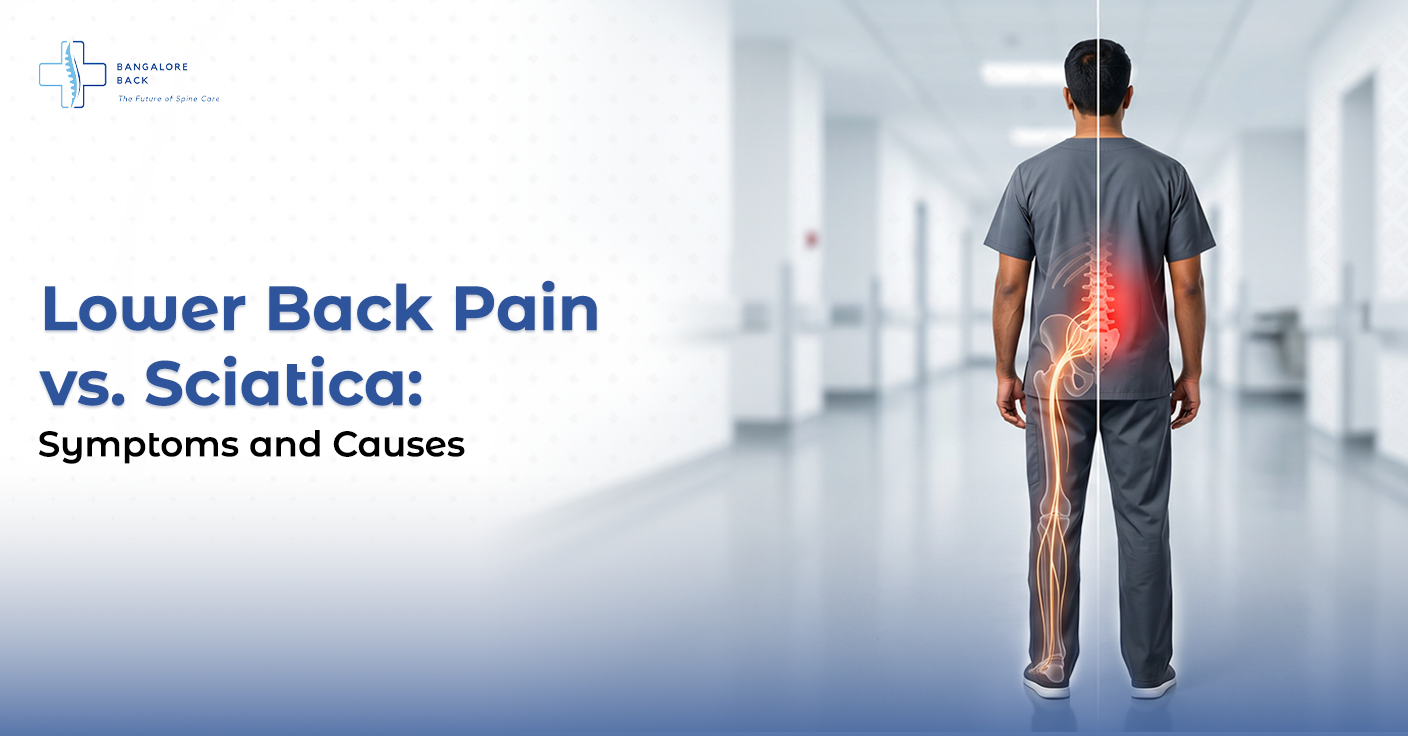
Lower Back Pain vs. Sciatica: Symptoms and Causes
Lower back pain and sciatica may start similarly, but nerve-related symptoms like radiating pain, tingling, or weakness need different care.
How to Keep Your Spine Healthy: 10 Doctor-Recommended Tips for a Pain-Free Back
Protect your spine with daily movement, proper lifting, healthy habits, and early care to reduce the risk of back pain.

10 Most Common Back Pain Causes — And What Each One Means for Your Spine
Back pain can result from posture, muscle strain, disc issues, nerve compression, arthritis, osteoporosis, or stress.