
 +91- 8889990247
 Book an Appointment
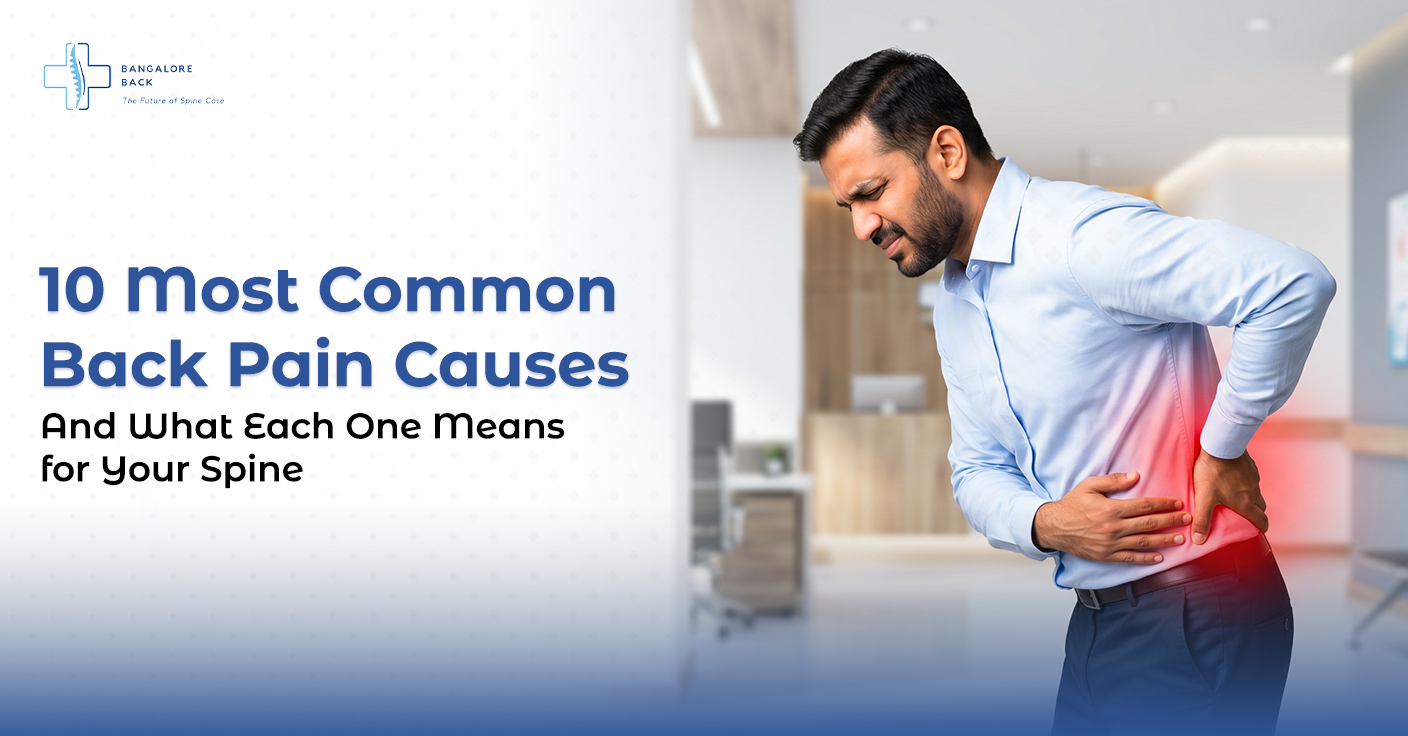
10 Most Common Back Pain Causes — And What Each One Means for Your Spine
Back pain often occurs without a clear cause. One week, it is a dull, dragging stiffness after work. Another week, it suddenly catches you when you bend, or sends a sharp pull down the leg. The odd thing is, it can feel almost the same each time, but the cause behind it may be completely different.
Effective back pain treatment starts with understanding exactly what in the spine is in trouble. Muscles, ligaments, discs, nerves, joints, and bones can all hurt. Each of these structures needs its own kind of care. When we guess, recovery slows, and small issues have time to become bigger.
At Bangalore Back, we look at back pain as a message, not just a complaint. Poor posture, muscle strain, slipped disc, degenerative disc disease, sciatica, spinal stenosis, arthritis, osteoporosis, and even long-term stress can all change how the spine feels and moves. Our aim is simple: find the real cause, protect movement, and help the back heal more safely.
What Are the Most Common Back Pain Causes?
Common causes of back pain range from everyday posture habits to age-related wear and tear on the discs, joints, or bones. Some problems come on suddenly. Others build up quietly over the years.
Back pain is not one single disease. It is a cluster of problems that occur in the same region.
Here are 10 causes that should not be ignored:
1. Poor Posture
Long hours at a desk, bending over a laptop, slouching on the sofa, or standing with most of your weight on one leg all put extra load on the spine. Over time, the muscles and ligaments in the back work harder than they should, especially in the lower back, leading to aches and stiffness.
2. Muscle or Ligament Strain
A quick twist, lifting a suitcase awkwardly, a heavy gym set done in a hurry, or even a sudden jerk while travelling can strain the soft tissues. The back often feels sore, tight, or “pulled” and hurts more with movement than at rest.
3. Herniated or Bulging Disc (Slipped Disc)
The discs between the vertebrae act like cushions. When the softer centre of a disc protrudes, it can press or irritate a nearby nerve. This can lead to back and leg pain, as well as tingling or numbness. In these cases, you need a targeted slipped disc treatment, not just pain medication.
4. Degenerative Disc Disease
With age, discs lose height, water, and flexibility. This is known as degenerative disc disease. With less natural cushioning in the spine, you may experience pain, stiffness and limited mobility. It usually develops slowly and quietly changes how the spine moves long before symptoms become strong.
5. Sciatica
Sciatica is pain that travels along the sciatic nerve, from the lower back through the hip and buttocks, and often down the leg. It usually appears when a disc, bone spur, or narrowing of the spinal canal presses on the nerve. Proper sciatica treatment targets the pressure on the spine, not just the pain in the leg.
6. Spinal Stenosis
In spinal stenosis, the space inside the spine where the nerves pass becomes narrower. This can cause back pain, heaviness or leg pain, numbness, or weakness, especially during walking or standing. It is more common in older adults as joints, ligaments, and discs change with age.
7. Spondylolisthesis
Spondylolisthesis happens when one vertebra slips forward over the one below it. Even a small slip can disturb spinal alignment and press on nearby nerves. Some people mainly notice lower back pain; others feel pain, tingling, or weakness in one or both legs.
8. Osteoarthritis
Osteoarthritis can affect the small facet joints in the spine. As the cartilage in these joints wears down, they may become inflamed, stiff, and painful. Simple activities like bending, twisting, standing for a while, or walking can become uncomfortable.
9. Osteoporosis
Osteoporosis makes bones weaker and more fragile. In the spine, this can lead to small compression fractures that cause new back pain or gradually worsening pain, along with changes in height and posture. In such cases, back pain treatment has to address both the fracture and the underlying bone health.
10. Psychological Stress
Stress does not stay in the mind alone. The body often holds it in the neck, shoulder, and lower back muscles. When stress is constant, these muscles remain tight, and the whole area becomes more sensitive. Mild back issues can become chronic pain.
How Do Age, Bone Health, and Stress Affect the Spine?
Age, bone strength, joint health, and stress all change how your spine handles daily load and pain.
- With age, discs dry out, and joints wear, which can make the back feel stiff or sore.
- When bones are weakened by osteoporosis, even minor forces can cause fractures.
- When stress stays high, muscles remain tight, and pain feels stronger and more constant.
Pain tablets may reduce discomfort, but they do not explain why the pain started. A strained muscle, a slipped disc, an arthritic joint, a fragile bone, and an irritated nerve each need a different plan. Effective back pain treatment always starts with a clear cause.
Not Just Backache: Warning Signs Your Spine Needs Expert Care
Many people have a minor backache now and then that settles with rest, a short break from heavy work, and basic stretching. But some patterns should not be ignored, and they do call for specialist spine pain treatment.
You should seek help if you notice:
- Pain moving from the lower back into the hip, buttock, or down the leg.
- Tingling, numbness, burning, or “electric” sensations.
- Back pain after lifting, a fall, a sudden twist, or an accident.
- Stiffness that disturbs walking, sitting, or sleeping.
- Pain that keeps coming back even after you improve posture and daily habits.
Ongoing pain is not simply “normal tiredness” from a long day. It is the spine asking for a proper check.
How does back pain treatment change by cause?
Back pain treatment changes because muscle strain, disc problems, arthritis, nerve compression, and bone weakness need different care plans. Diagnosis helps match treatment to the real source of pain.
Why should I not ignore recurring back pain?
Recurring back pain may signal spinal stress, disc changes, nerve irritation, or joint wear. Early evaluation can help prevent the problem from becoming more painful or limiting.
What is the link between sciatica and back pain?
Sciatica often begins in the lower back when the sciatic nerve gets irritated or compressed. The pain may travel into the hip, buttock, or leg, so treatment should address the nerve source.
Written and Verified by:
Dr. Abhishek Mannem
Exp: 10+ Year
MBBS, MS(ORTHO), DNB(ORTHO) FISS (SPINE SURGERY)
Spine Surgery, Orthopedics and Sports Medicine
Featured Blogs

Dr. Abhishek Mannem Honoured with Healthcare Access Award at Entrepreneur Game Changers Award & Summit 2025–26
Under Dr. Abhishek Mannem's leadership, Bangalore Hospitals has moved from a traditional, city-centred approach to a hub-and-spoke outreach system.
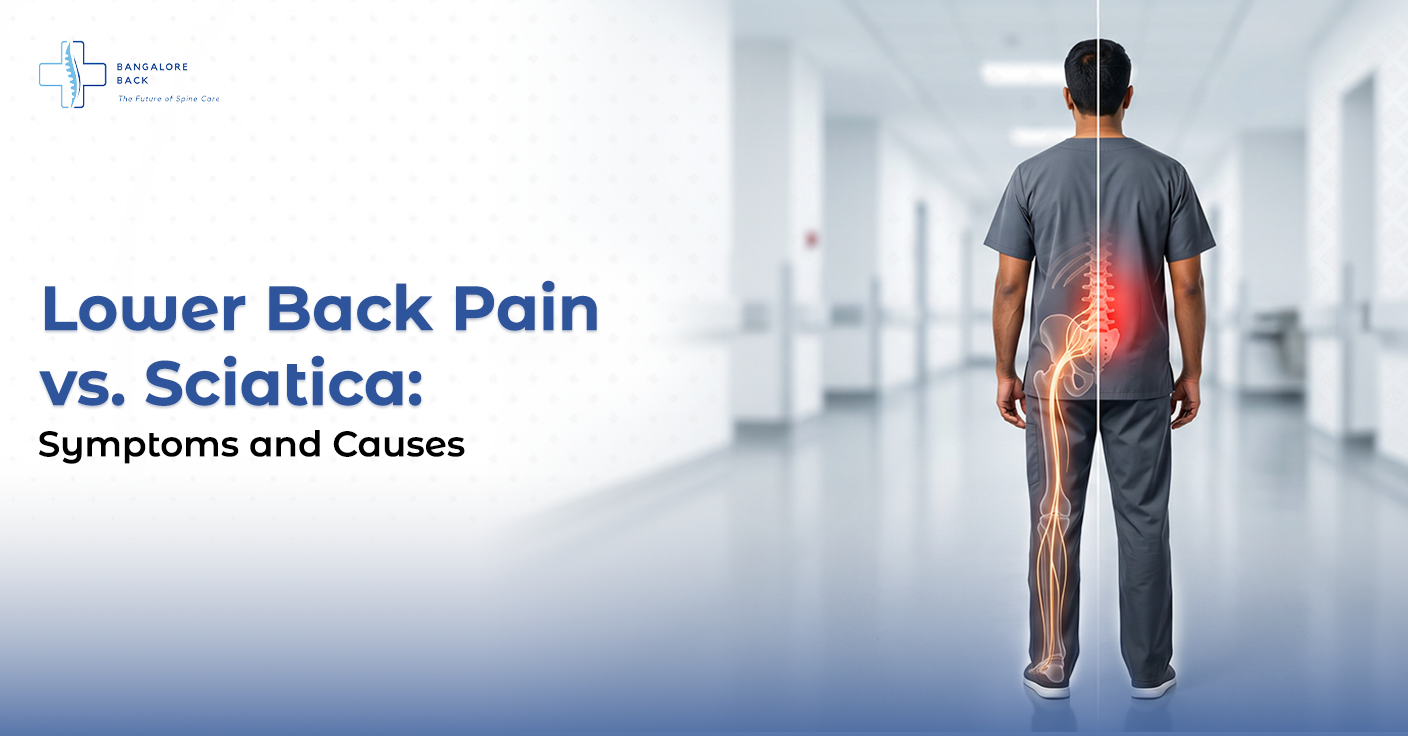
Lower Back Pain vs. Sciatica: Symptoms and Causes
Lower back pain and sciatica may start similarly, but nerve-related symptoms like radiating pain, tingling, or weakness need different care.
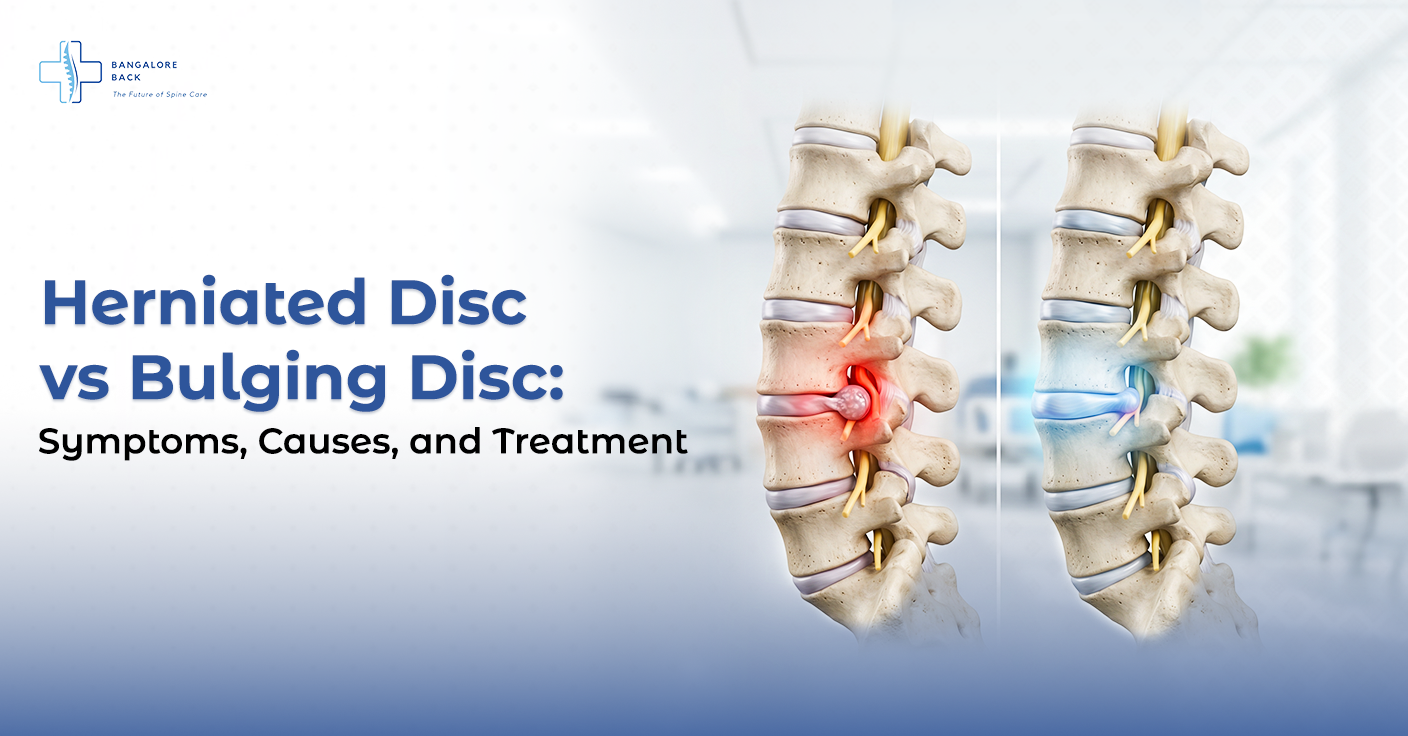
Herniated Disc vs. Bulging Disc: Symptoms, Causes, and Treatment
Understand the difference between bulging and herniated discs, symptoms, causes, treatment options, and when to seek specialist care.
How to Keep Your Spine Healthy: 10 Doctor-Recommended Tips for a Pain-Free Back
Protect your spine with daily movement, proper lifting, healthy habits, and early care to reduce the risk of back pain.